About Empowering African Youth
Partner with us
Virginia-based 501(c)(3) nonprofit organization and public charity, qualified to receive tax-deductible donations, bequests, devises, transfers, or gifts.
FAITH PARTNERS: Living God’s Love
Empowering African Youth was born from a deep faith in God and a powerful calling: to break the cycle of poverty and injustice through equitable education and youth leadership rooted in African identity and community empowerment.
Our founder, Dr. Darius Coulibaly, knows this mission personally. Born in Southern Côte d’Ivoire (Ivory Coast) and raised in both southern and northern Côte d’Ivoire, he experienced the harsh realities of poverty firsthand, growing up without electricity, clean water, Internet, or nearby health centers. Every day, he walked nearly five miles to school under the burning sun, on dusty roads, rain or shine. His elementary and middle schools had no electricity, no computers, no smartboards, and no indoor restrooms.
By God’s grace, Darius arrived in America at age 17, alone and far from his family, village, and continent. Even then, he carried a clear purpose: to put God’s love into action by serving others. His lifelong calling is to combat poverty and inequity through education and leadership development, empowering youth to thrive while honoring their identity and community.
At Empowering African Youth, we believe we are God’s hands and feet, called to serve and show His love in tangible ways. Our programs allow you to live your faith, love your neighbor, and create lasting impact.
No experience is necessary to volunteer, and all faith communities are welcome.
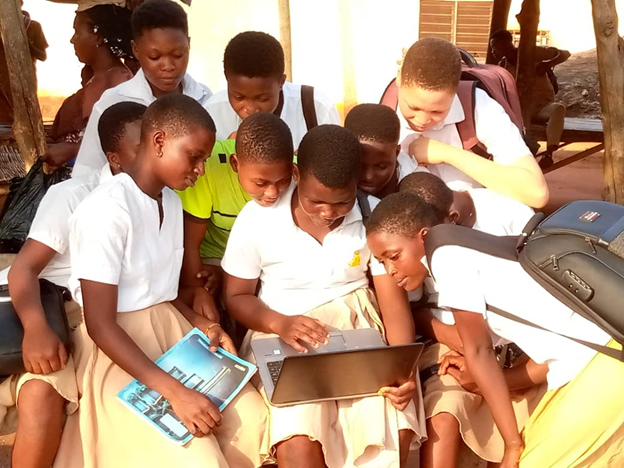
At our learning center in Africa, we’ll equip you with everything you need. Opportunities include academic support, youth mentoring, and hands-on activities in STEM, literacy, arts, languages, farming, and more.
We can even tailor experiences for your group, whether you want to focus on elementary, middle, or high school students. Volunteering together provides a way for your faith group to have fun together while transforming the life trajectories of K12 students in Africa and the U.S.
Together, we can break barriers, transform lives, and fulfill God’s call to serve.
How Can Your Faith Group Partner with Empowering African Youth?
Fundraise for Impact
Help us provide equitable education, STEM programs, and youth leadership development that transform the life trajectories of K-12 students across Africa and the U.S.
Serve Abroad
Travel as a faith group to one of the countries where we work—Togo, Benin, or Ghana—and make a hands-on difference for K–12 students. Experience the joy of serving and learning together.
Volunteer from Home
Become an Online Volunteer Reader and read to K–12 students in the U.S. and Africa, right from the comfort of your home. Just 30 minutes of reading a week can change a child’s future.
Email dcoulibaly@empoweringafricanyouth.org to learn more about how to get started.
How Can Your Business Partner with Empowering African Youth?
When your organization partners with us, you will receive a number of reciprocal benefits, such as recognition and tax deductions. Additionally, our partners often tell us that the partnership provides an overall increase in their group’s morale.
Your organization can get involved through:
Product donations: laptops, iPads, STEM kits, Smartboards, and whiteboards.
Financial support: Donate and double your impact with your employer’s matching gift. For more information, visit our Employer matching gifts FAQ.
Volunteer engagement: Travel as a group to a country in Africa or a school in the U. S where we serve K12 students and lead a STEM event one evening or after school (3-5 pm).
Email dcoulibaly@empoweringafricanyouth.org to learn more about how to get started.
How Can Your College or University Partner with Empowering African Youth?
Fundraise for Impact
Help us provide equitable education, STEM programs, and youth leadership development that transform the life trajectories of K-12 students across Africa and the U.S.
Spring Break in Africa
Travel as a club to one of the countries where we work, Togo, Benin, or Ghana, and make a hands-on difference for K–12 students. Experience the joy of serving and learning together.
Volunteer from Home
Become an Online Reading Coach and read to K–12 students in the U.S. and Africa, right from the comfort of your home. Just 30 minutes of reading a week can change a child’s future.
Email dcoulibaly@empoweringafricanyouth.org to learn more about how to get started.